Showing posts with label World Oral Literature Project. Show all posts

Monday, 13 December 2010

Our Project in News

The Hindu - Monday, December 13, 2010

Cambridge project to preserve rare Indian and other languages


In U.K., the site lists 21 disappearing languages
There are more than 6,500 living languages now


London: The University of Cambridge has launched a unique project to provide universal access to languages of India and elsewhere that are endangered and part of the world's disappearing spoken traditions.
The open database, called World Oral Literature Project, has been developed by the University's researchers and is available at the following URL: www.oralliterature.org.
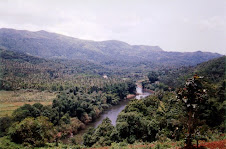
In India, the projects include ethnographic documentation of the literature and culture of the indigenous Mudugar and Kurumbar communities in Palakkad district of Kerala using digital video, audio and photography.
Another India-based project is a 20-hour-long recording of a ballad about the life and adventures of Tejaji, the Snake Deity, sung by the Mali community (gardeners) in Thikarda village of Bundi district in Rajasthan, along with the documentation of Tejaji customs and traditions in the Hadoti region of the State.
The recordings will be transcribed and translated from Hadoti into Hindi and English and distributed as books and DVDs.
The project will also keep records of 3,524 world languages, ranging from those deemed “vulnerable” to those that, like Latin, remain well understood but are effectively moribund or extinct, the University sources said.
Other projects on Asia include a year-long assignment to collect, record, transcribe and translate Torwali oral literature with the full participation of the community in Pakistan, building on the ongoing Torwali dictionary project supported by the National Geographic.
In Nepal, the project includes recording, transcribing and translating the oral literature of the Ngadag Lamas of Nubri, and four weeks of fieldwork in Mustang, during which 51 songs from the orally transmitted Kha Lu repertoire were recorded, transcribed and translated.
Researchers hope that the pilot database will enable them to “crowd-source” information from all over the world about both the languages themselves and the stories, songs, myths, folklore and other traditions that they convey.
Users can search by the number of speakers, level of endangerment, region and country.
In the United Kingdom, the site lists 21 disappearing languages, ranging from the relatively well known, like Scottish and Welsh, to obscure ones like Old Kentish Sign Language.
“We want this database to be a dynamic and open resource, taking advantage of online technology to create a collaborative record that people will want to contribute to. At present, the world has more than 6,500 living languages, of which up to half will cease to exist as spoken vernaculars by the end of the century,” Mark Turin, Director of the World Oral Literature Project said.
In most cases, their disappearance is a by-product of globalisation, or rapid social and economic change, he added.
The project aims to document and make accessible these spoken traditions before they are lost without record.
“While some severely endangered languages have been well documented, others, which may appear to be less at risk, have few, if any, records,” Dr. Turin said.
“Here in Cambridge we are interested not only in language endangerment levels but also in what might be called a ‘documentation index.' To this end, we are locating references to and recordings of oral literatures in collections around the world. Of the 3,524 languages listed, about 150 are in an extremely critical condition.” In many of these cases, the number of known living speakers has fallen to single figures, or even just one. — PTI


Source: http://www.hindu.com/2010/12/13/stories/2010121364762200.htm

Tuesday, 27 July 2010

Cambridge News carries our centre's photograph!

Out of the 6,700 languages spoken by people all over the world, a third are in danger of extinction.

Preventing this, or at least slowing the process, is the massive challenge faced by researchers and academics at the World Oral Literature Project, which was established by Cambridge University in January 2009.

Dr Mark Turin, director of the project and research associate at the Museum of Anthropology and Archaeology, said the project has attracted much interest since its inception.

It works with local communities and fieldworkers who are now collecting and recording texts, myths, songs, legends, proverbs, narratives and other various literatures that can be used to save a language from vanishing without record.

Dr Mark Turin
Dr Mark Turin
Dr Turin said there were many reasons for preserving and documenting endangered languages.

He said: “Each and every language is a celebration of the rich cultural diversity of our planet and an expression of the unique ethnic, social, regional or cultural identity and world view of a people.”

The project is funding fieldwork and other projects through grants in locations all over the world, including Colombia, Malawi, India, Mongolia and Nepal. It has so far supported the documentation of the oral literature, traditions and languages of some 15 communities.

The work of preserving the world’s languages, time-consuming and intensive, comes with a sense of urgency. According to Dr Turin, the process of extinction can be quite rapid.

He said: “We should remember that the evolution of a species or a language takes much longer than its extinction.”

However, determining whether a language is actually endangered is not a precise science.

Researchers need to not only look at the total number of people who speak the language, but their ages as well. If the majority of people speaking a language are elderly or above the age of reproduction, the language is at risk of dying off with the living population.

Village elder Ranki
Village elder Ranki
Researchers also study the rate of transmission between parents and children to establish whether the language will be actively used by subsequent generations.

Another key determinant of the survivability of a language is whether it has a writing system. Some languages are only spoken or signed. In Nepal, for example, only 10 per cent of the more than 100 languages spoken in the country have writing systems.

Geographically, endangered languages are thought to be concentrated between the Tropics of Cancer and Capricorn, especially around the Equator.

Dr Turin said: “Recent scholarship on language endangerment points to an intriguing correlation: language diversity appears to be inversely related to latitude, and areas rich in languages also tend to be rich in ecology and species.

“Both biodiversity and linguistic diversity are concentrated between the tropics and in inaccessible environments, such as the Himalayas, while diversity of all forms tails off in deserts.”

Globally, the majority of people speak just a handful of languages. In fact, 95 per cent of the world’s population speaks just 5 per cent of world’s living languages.

The world’s most popular languages, such as English and Spanish, are often second languages for many people, but can quickly become primary languages out of necessity. Because of this trend, there has been a growth in “heritage languages” – those in which people only know how to say a few select words, such as grandmother or grandfather. Once a language has reached this phase, it can quickly become extinct.

And the risk of extinction is now more prevalent than ever. Globalisation, although also a key element in preserving languages, has caused a massive cultural and geographical shift. People looking for a better standard of living move from rural to urban areas, often cities, where they need to speak the most common urban or national language.

There is also a perception that traditional languages are outdated or unfashionable, whereas widely spoken languages are seen as worldly and sophisticated.

Dr Turin said: “People think that to be modern they have to leave their old ways at the doorstep of modernity.”

The project is trying to counteract this trend and has received support in its efforts from some unexpected sources. For example, a man from Taiwan – a member of the Paiwan ethnic group, which had a total population of just over 70,000 in the year 2000 – walked into the project’s offices with tape recordings of songs and prayers in his traditional language, which he wanted the project to help him preserve.

Judging from these types of responses, there is a strong desire to keep the world’s linguistic diversity from fading.

The project has been holding workshops and lectures to provide an opportunity for researchers and academics to share their knowledge and findings with the public and each other. The lectures are free and open to the public – the workshops cost £30 for registration. The next workshop, in December, will focus on the distribution of oral literature through traditional and digital media.

For more information, see www.oralliterature.org.